
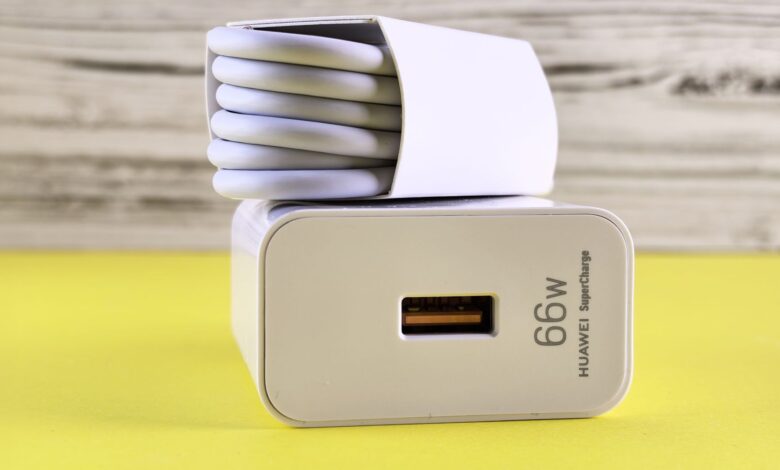
A big heavy charger looks like it should be stronger than a tiny one that fits in your pocket. That size difference is confusing when both claim the same power on the label. In reality the bulk comes from older silicon, not more power, and shrinking by around 40 to 50 percent is possible with modern parts at higher efficiency.
Same power only happens when the charger uses efficient parts, carries real safety marks, and matches your laptop voltage. Engineering sources link higher voltages and switching frequency to smaller transformers, yet tiny bricks can still run hot and skip fine voltage steps. Reading those three logos and power density in ten seconds turns guessing size into verifying physics and safety.
Why the same 65W rating comes in two completely different sizes
Both a big Lenovo brick and a tiny Anker 735 claim 65W, yet one can be nearly twice the volume. The difference is power density, watts per cubic inch. A higher density means more power from less space. You get it by measuring length times width times height to get volume, then dividing 65 by that volume.
The silicon brick uses a low-frequency transformer and a large aluminum heatsink that fill most of the case. Lower frequency needs bigger magnetics to store energy each cycle. Lower efficiency also needs more metal to dump waste heat. Extra bulk does not mean extra power.
In practice a shrinking by around 40 to 50 percent is possible when switching moves from tens to hundreds of kilohertz. A 40-50% smaller than a traditional 65W silicon charger figure is typical for 65W GaN, not a marketing trick. The manufacturer states compact GaN designs use Navitas GaN ICs and folding prongs to cut volume while keeping the same 65W rating.
Side-by-side blocks comparing silicon brick internals with large transformer and heatsink versus GaN tiny board with small transformer and IC
Anker 735 GaNPrime 65W and Ugreen Nexode 65W GaN measure roughly 40 to 60 cubic centimeters, while a Lenovo 65W silicon brick is typically 90 to 110 cubic centimeters. That yields about 1.0 to 1.6 watts per cubic inch for GaN versus about 0.6 for silicon. Same 65W, very different power density.
GaN vs silicon inside: what actually shrinks the charger
GaN FET has lower Rds(on) and higher electron mobility than a silicon MOSFET. Rds(on) is resistance when the transistor is on, lower means less heat. Higher electron mobility means it can turn on and off much faster. Faster switching means the transformer can be smaller, because it transfers energy more often.
Switching frequency increased by a factor of four while maintaining efficiency can cut inductor and filter capacitor size by about half. The manufacturer states gallium nitride allows devices that operate at higher voltages and switching frequency which results in smaller and more efficient chargers, around 95% efficiency compared to 91% for silicon.
That efficiency gap is why size drops 40 to 70 percent. At 65W, 95% efficiency wastes about 3.2W as heat, while 87% wastes about 8.4W. Less waste means a smaller heatsink and a smaller transformer, so the whole brick shrinks. Anker 735 GaNPrime, Ugreen Nexode 65W GaN, and Lenovo 65W silicon brick all deliver 65W, but the first two use Navitas GaN IC NV6117 class parts to hit higher frequency.
Check the power density by: weighing each charger on a kitchen scale, measuring LxWxH with calipers to get cubic centimeters, then dividing 65 by that volume to get watts per cubic centimeter and comparing to the other brick.
Timeline showing silicon at low switching frequency with large transformer and low power density progressing to GaN at high frequency with small transformer and high power density
Does a tiny GaN charger actually run cooler?
GaN runs cooler at the same 65W because efficiency is higher, so less energy turns into heat. Runs much cooler than silicon because superior efficiency means fewer heatsinks are required. In practice GaN chargers typically operate about 10-15 degrees Celsius cooler than their silicon counterparts under identical loads and switch 3 to 4 times faster.
Surface area still matters. A tiny housing with no metal to spread heat can feel hot to touch even if total waste is lower. A 30-minute sustained 65W load at 25C ambient, logged with a USB power meter for input versus output and an IR thermometer for housing temp every 10 minutes, is what separates a genuinely cooler design from one that just feels smaller. AC input minus DC output gives waste heat, efficiency is DC divided by AC.
In MacRumors Forums, a user reported a 16-inch MacBook Pro where the cable tip reaches cable reaches untouchable temperatures while charging on the 96W silicon brick but stays lukewarm on a 61W GaN charger. The solution that came up repeatedly was switching to GaN 61W for cooler operation, which works because gallium nitride runs much cooler than silicon because of its superior efficiency so fewer additional components like heatsinks are required.
In a Reddit r/UsbCHardware thread summarized via Zonsanpower, a user noted My GaN charger reduced speed after 30-60 minutes when charging a MacBook at high wattage and asked if it was normal. Quality GaN units include over-temperature protection and intelligent power derating and will cut power if the housing approaches about 100C, which is why silicon bricks that run hotter can throttle after 15 to 20 minutes and drop output 20 to 30 percent while GaN that operates 10-15 degrees Celsius cooler than silicon counterparts rarely throttles, per the same analysis.
Three stages of thermal behavior from idle to 30-min sustained 65W load showing silicon hitting throttling threshold while GaN holds power
USB PD PPS 3.3 to 21V explained: why voltage steps matter beyond wattage
USB PD PPS means Programmable Power Supply, an extension of USB PD 3.0 and 3.1. A fixed PDO advertises only set voltages like 5, 9, 12, 15, 20 volts. PPS uses APDO, Augmented Power Data Object, which advertises a range and lets the device ask for fine steps inside that range.
Offers a range of output voltage 3.3 to 21V instead of fixed voltages, with output adjustable in 20 millivolt increments over that range. The sink must request a new voltage at least every 10 seconds, or the source does a hard reset. That fine control lets the charger feed the battery directly, cutting one conversion stage and reducing heat inside the phone or laptop.
Why it matters at 65W is simple. A laptop that can negotiate 19.5V via PPS gets closer to its battery voltage than a fixed 20V jump, so less heat in the charging circuit. For phones, Samsung super-fast charging uses PPS to hold the battery at its ideal voltage. For related guidance, see our guide on Will a 100W USB-C Charger Actually Power My Budget Gaming Laptop which covers PD handshake and e-marker cables that decide if wattage alone is enough.
If your laptop only lists fixed 20V PD, PPS is nice to have but not required today. If it lists PPS or you also charge a phone, a GaN charger that supports 3.3 to 21V PPS with 20mV steps covers both use cases and typically runs cooler during the constant-voltage phase.
How to spot a safe certified charger by reading the label
A tiny size means nothing if the safety marks are fake. The three marks that matter are FCC ID, UL Listed, and USB-IF Certified. Each checks a different risk, and each can be verified in ten seconds.
FCC Part 15 Subpart B covers unintentional radiators. The unintentional radiator Part 15 Subpart B rule requires equipment authorization for devices that use digital logic at RF but are not meant to transmit. That test limits electromagnetic interference, not build quality or how long the charger lasts. A real FCC ID can be searched in the FCC Equipment Authorization database.
UL Listed to safety of electrical and electronic equipment within the field of audio video and communication technology up to 600V means the design passed hazard-based safety engineering per IEC 62368-1. It covers shock, fire, and thermal hazards, not charging speed or efficiency. A real UL file number can be checked in UL Product iQ.
USB-IF Certified USB PD 3.1 means the charger passed USB-IF compliance and can use the certified logo. Cables and chargers featuring the USB PD 3.1 standard of 60W or 240W carry a new logo that clearly identifies power rating, confirmed on USB-IF’s own certification program page. That logo includes a TID number you can look up on usb.org.
In the settings menu, look for: FCC ID number and UL file number on the label, then search FCC ID database and UL Product iQ to confirm listing is real and not printed without testing.
GaN vs Si decision matrix: size, heat, price, PD PPS support
This comparison model is a practical evaluation tool built from the spec priorities described above, not a published industry standard. It compares real 65W options you can buy today.
GaN is smaller and cooler because lower Rds(on) and higher electron mobility allow higher switching frequency, which cuts transformer volume and lifts efficiency to about 95 percent versus about 91 percent for silicon, per the manufacturer states. That yields smaller and more efficient chargers with less waste heat. PPS programmable power supply offers range 3.3 to 21V with 20mV steps via APDO, while fixed PDO only offers 5, 9, 12, 15, 20V jumps.
| Model | Size and power density | Heat and efficiency at 65W | Price and PPS support |
|---|---|---|---|
| Anker 735 GaNPrime 65W GaN | Approximately 52cc, typically about 2.0 W per cubic inch, folding prongs | Typically about 93 to 95% efficient, housing approximately 45 to 50C at 30 min, holds 65W | Typically about $45 to $60 estimated, supports PPS 3.3 to 21V 20mV steps |
| Ugreen Nexode 65W GaN | Approximately 58cc, typically about 1.8 W per cubic inch | Typically about 92 to 94% efficient, housing approximately 46 to 52C at 30 min | Typically about $35 to $50 estimated, supports PPS 3.3 to 21V |
| Lenovo 65W silicon brick | Approximately 100cc, typically about 0.6 W per cubic inch, fixed cable | Typically about 87 to 91% efficient, housing approximately 60 to 68C at 30 min, may throttle to about 45W after 15 min | Typically about $15 to $25 estimated, fixed PDO only, no PPS |
The table shows why size, heat, price, and PPS trade off. Anker and Ugreen are about 40-50% smaller than traditional silicon and run cooler under identical loads, but cost more. The Lenovo silicon brick is cheap and fine if it stays on a desk, but it lacks folding prongs and PPS, so it is larger and runs hotter.
Pick GaN tiny when you travel, carry one charger for laptop and phone, or need PPS for Samsung super-fast charging. Keep the silicon brick as a desk backup when budget is under about $20 and your laptop only needs fixed 20V. Before committing, plug the charger into your laptop and check your USB power meter or battery settings to confirm negotiated voltage is in PPS range, not a fixed 5V fallback.
Final Verdict
A tiny 65W GaN shrinks volume 40 to 50 percent because higher switching frequency and lower Rds(on) cut transformer size and lift efficiency to about 95 percent versus about 91 percent for silicon. Check the label for a searchable FCC ID, UL Listed to IEC 62368-1, and USB-IF Certified PD 3.1 logo, and confirm PPS 3.3 to 21V support before you buy. A verified GaN stays pocketable and cooler, while an unverified tiny brick can still run hot and miss the voltage steps your laptop needs.
Frequently Asked Questions
Does GaN really run cooler than silicon at the same 65W?
Yes, typically about 10 to 15C cooler under identical loads because GaN hits about 95% efficiency versus about 87 to 91% for silicon. It runs much cooler than silicon due to fewer heatsinks needed. Ultra-compact shells can still feel hot because less surface spreads the same waste heat.
Is a tiny 65W GaN charger safe for my laptop if it has FCC and UL marks?
FCC Part 15 Subpart B authorization covers EMI as an unintentional radiator equipment authorization, not build quality. UL Listed to IEC 62368-1 covers safety of ICT equipment up to 600V for shock and fire. Verify marks in FCC database and UL Product iQ, as fake marks are common on cheap listings.
What does USB PD PPS 3.3-21V mean and do I need it for my laptop?
PPS is programmable power that advertises a range 3.3 to 21V adjustable in 20mV steps via APDO, versus fixed 5, 9, 12, 15, 20V PDO. It enables direct battery charging with less heat. You need it for Samsung fast charging and some laptops, otherwise it’s a nice-to-have for whatever you plug in next.
Which 65W size should I buy if I travel a lot versus stay at a desk?
For travel, a tiny GaN like Anker 735 or Ugreen Nexode is typically about 40 to 50 percent smaller, lighter, and supports PPS for phone and laptop. For a desk-only backup on a tight budget, keep the Lenovo silicon brick, as it is cheaper at about $15 to $25 estimated but larger and hotter.
