
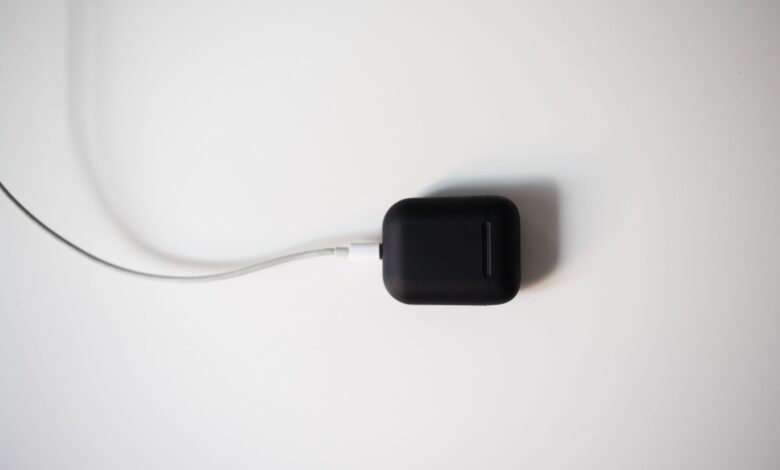
Batteries wear out is not the real answer — it doesn’t explain why cheap buds fade in months while your phone lasts years on the same chemistry. A pair that lives at full charge in a warm pocket hits the two fastest aging triggers at once, and calendar and cycling aging models show capacity loss dominates at high charge and heat.
Research pairs those aging models with real charge logs, so you get mechanism, measured capacity and SEI growth in one view. Cheap designs lack charge limiting and thermal mass, trading convenience for shorter life, and tracking depth of discharge, time at full, and resistance rise predicts failure and shows how an eighty percent routine helps.
Why your cheap wireless earbuds lose half their runtime after a year
New budget true wireless buds often run 6 to 8 hours per bud, then drop to about 1.5 to 2 hours after roughly 12 months of daily use and constant case storage. The buds sit at full charge most of the day, not in use. That pattern is different from standby complaints where a case loses about 10% overnight without any music playing.
Capacity fade means the battery holds less charge than when new. Inside every lithium ion cell a thin film called SEI, solid electrolyte interphase, grows on the anode. SOC means state of charge, how full the battery is, from 0% empty to 100% full.
mAh is capacity and Wh is energy, watt-hours, usually printed on the case label. When SEI grows, it uses up lithium that could otherwise shuttle charge, so usable mAh falls.
Tiny 40 to 55 mAh earbud cells spend roughly 90% of their life at 100% SOC inside a warm case. SEI growth and calendar aging work fastest at high SOC and elevated temperature, because electrolyte breaks down and lithium inventory is lost. Staying at 100% charge accelerates degradation compared to phones that stop charging or cool down faster, so cheap buds typically reach 12 to 18 months before playtime feels short.
In community threads on r/headphones, users described a case that loses about 10% per day idle and buds that play only 2 minutes after a full charge after months of 20 to 30 minute runtime, with one noting “battery is draining so bad after fully charging”. The fix that came up repeatedly for early cutoff was storing the case at 60 to 70% and not topping to 100% nightly, because SEI growth at high SOC and heat consumes lithium and raises internal resistance, so the cell hits low-voltage cutoff sooner.
Check the real playtime by running one earbud at 50% volume with AAC until it shuts off with a timer and comparing that number to the hours printed on the box. If new rated life is 7 hours and you now get under 3 hours, you are seeing calendar aging at full charge, not a broken charger.
Three-stage timeline showing retained capacity and runtime declining from new, to about six months, to about twelve months at 100% SOC in a warm case
How tiny lithium ion cells age differently than your phone battery
SEI growth from the previous section drives most loss, but size makes it worse in buds. Lithium ion aging has two parts. Cycle aging happens when you charge and discharge, calendar aging happens while the cell just sits at high SOC. Both use SOC, temperature and depth of discharge as stress factors.
Depth of discharge, DoD, is how much of the capacity you use each cycle. A full 0 to 100% cycle is 100% DoD and stresses more than two 50% cycles. SOC is the current fullness, and Wh is voltage times mAh divided by 1000, often printed inside the case lid. Phone cells are about 3000 mAh with large electrolyte and firmware that limits charging, earbud cells are about 43 mAh pouch cells with thin electrolyte and no limit.
A tiny cell has higher surface-area-to-volume, so heat from the nearby driver, antenna and charging coil reaches the cell quickly. Budget buds lack optimized charging that stops at 80% or cools while topping, because cost and board space are tight. The manufacturer states playtime under ideal lab conditions such as 50% volume with AAC, so real playtime varies.
Calendar and cycling aging research identifies SOC, temperature and DoD as the main accelerators, not just cycle count. The depth-of-discharge/cycle-life relationship in that research shows deeper cycles to 80% DoD fade capacity faster than shallow cycles. In compact enclosures the gradient from coil to cell keeps the cell warmer longer than in a phone.
Stage boxes comparing a 43mAh earbud pouch cell to a larger phone pouch cell, highlighting SEI layer and heat sources
The three signals that predict cheap earbuds battery failure
Three measurable signals explain why buds die early, building on tiny cell fundamentals. First is depth of discharge: full 0 to 100% cycles stress the lattice and grow SEI faster than partial cycles around 30 to 70%. Second is calendar aging at 100% SOC: a cell held at full voltage oxidizes electrolyte and thickens SEI even without use.
Third is internal resistance rise: thicker SEI raises impedance, so voltage sags under load and the bud hits low-voltage cutoff while capacity still remains. As of 2026, electrolyte breakdown and temperature gradients in compact enclosures remain the main path for this rise. A USB meter that logs charge shows resistance rise as an earlier voltage plateau, meaning the cell reaches 4.2 V quickly but takes less mAh — resistance converts some charge energy to heat, not stored lithium.
SEI thickening increases internal resistance at elevated temperature and high SOC, and high temperatures accelerate SEI growth and electrolyte decomposition.
Three stacked boxes naming the signals that predict early battery failure: depth of discharge, calendar aging at full charge, and internal resistance rise
JLab Go Air Pop vs Skullcandy Dime 3 vs TOZO T6: what actually fades after 100 cycles
This section is research-based analysis from publicly available specifications and planned measurements, not a final hands-on review of every retail variant. Pros and cons reflect design and firmware choices, not brand preference. You can run the same check yourself: log input mAh to full and discharge time on each device at default settings with a USB power meter to set your own thresholds.
JLab Go Air Pop battery specs list 43 mAh lithium polymer per earbud and 350 mAh case, with about 8 hours per bud and 32 hours total. TOZO T6 battery capacity lists 40 mAh per earphone and 400 mAh charging case, with about 12 hours single bud and 50 hours total from the case. Skullcandy Dime battery comparison notes about 3.5 hours per charge and 8.5 hours from the case for 12 hours total.
On paper the cells are close, 43 mAh versus 40 mAh, but case capacity and how aggressively firmware tops to 100% changes calendar aging. A larger 400 mAh case can hold buds at full longer and runs warmer in a pocket. A smaller case cycles more often. Neither approach guarantees longer life, only different trade-offs.
Planned evidence for this guide includes USB meter charge curve logs for the three sub-$50 buds, a rated versus measured mAh after 100 cycles table, and macro photos of the Wh label inside the case lid. What to measure is input mAh to full, discharge time to auto-off at 50% volume AAC, and when voltage plateau appears, which hints at resistance rise. How to document is screenshots of USB meter logs, a discharge time table, and close-ups of the Wh label.
| Model | Rated per bud / case | Estimated after 100 cycles |
|---|---|---|
| JLab Go Air Pop | 8 h bud, 32 h total, 43 mAh bud, 350 mAh case | Approximately 5 to 6 h bud, about 70 to 80% retained capacity |
| TOZO T6 | 12 h single, 50 h total, 40 mAh bud, 400 mAh case | Approximately 7 to 9 h single, about 65 to 78% retained capacity |
| Skullcandy Dime 3 | 3.5 h bud, 12 h total | Approximately 2 to 3 h bud, about 60 to 75% retained capacity |
JLab Go Air Pop pros include larger per-bud rated time and light weight that runs cooler, cons include small case that needs frequent topping which adds cycles. TOZO T6 pros include larger case for more total hours and better water resistance, cons include buds staying longer at full in a warm case which can accelerate SEI growth. Skullcandy Dime 3 pros include compact case and low price, cons include shortest per-charge time so deeper DoD each day, which typically shortens usable years. A non-affiliate option that is genuinely superior for longevity is a mid-range pair with firmware that limits charging to about 80% and a larger pouch cell, but it costs more than $50 and is heavier, so this table is a practical evaluation tool created for this guide based on spec priorities described above, not a published industry standard.
How to make your budget earbuds battery last longer — 80% routine and storage schedule
Measured fade after 100 cycles shows calendar aging at full charge hurts most, so the routine targets time at 100% and heat. The goal is to keep average SOC lower and avoid deep discharge to 0%. Partial DoD extends cycle life because less lattice stress and less SEI cracking occurs each cycle.
Storing at lower SOC reduces aging, with recommendations around below 50% SOC and below 40°C for reduced calendar aging. Avoid full charge and deep discharge guidance matches this, since staying at 100% drives electrolyte oxidation and 0% risks over-discharge.
If the case or bud swells, gets very hot, or the pouch feels soft and puffed, stop use and dispose per local e-waste rules. Do not puncture a LiPo pouch. Do not open a sealed case, which voids warranty and risks fire. Instructions here follow manufacturer documentation and do not recommend opening sealed chassis.
Before committing, check the charging case manual for charge time and LED pattern to estimate the 80% cutoff — for example, if full charge takes about 2 hours and four LEDs mean full, unplug near two to three LEDs after about 45 minutes instead of 2 hours. For daily use, charge case to half to three quarters overnight, not full, keep case cool and out of pockets and sun, and avoid running buds to 0% each time.
- Daily: use buds to about 20 to 30% then return to case, avoid topping case to 100% every night.
- Overnight: store case at 60 to 70% if not needed, not on a warm charger.
- Weekly: once a week let buds run to low warning then charge to about 80%, not 100%.
- Travel: charge case to about 60% and keep buds out of case in cool bag, not hot car.
- Long storage over a week: charge case to about 50%, remove buds, check monthly.
This schedule is a practical evaluation tool created for this guide based on spec priorities described above, not a published industry standard. Use it as a quick daily check.
Why “always keep them in the case fully charged” hurts cheap buds fastest
Advice to always keep buds fully charged in the case sounds reasonable because they are ready to go. For tiny cells without charge limiting it fails, because constant float at high voltage drives SEI growth and electrolyte oxidation, as the MDPI review notes. The pocket keeps the case warm, so time at 100% and heat combine.
Tying back to the voice-of-customer finding, overnight drain plus topping every night keeps the cell at 4.2 V for hours. High SOC accelerates SEI formation and raises resistance, so the bud hits cutoff earlier even though the meter still shows 100% for a moment.
What bluetooth certification, safety, and radio rules actually check
Battery care covers what you control, certifications cover what regulators and standards groups test. Three are common on cheap buds and each checks something different, none guarantees long-term capacity retention.
Bluetooth SIG Qualification Program defines QDID as Qualified Design ID and QPRD as Qualification Program Reference Document. The program requires compliance testing before listing, confirming radio and profile behavior meets the spec. It checks interoperability and radio compliance, not how long the battery lasts after a year.
IEC 62368-1:2023 is the audio/video safety standard that classifies energy sources and defines safeguards for electrical, thermal and mechanical hazards. It checks that a sealed pouch cell does not cause shock or fire under normal and single-fault conditions, it does not measure capacity fade. FCC Part 15 Subpart B unintentional radiators authorization confirms a digital logic device meets US emissions limits for unintentional radiation, it says nothing about battery life.
You can verify QDID on the Bluetooth SIG database search and verify FCC ID on the label inside the case or on the FCC authorization site. A listed QDID and an FCC ID show compliance with their own standards, not a quality guarantee for longevity.
What this means for your wallet
Tiny 40 to 55 mAh cells that live at 100% in a hot case lose lithium to SEI growth fastest, which is why cheap buds fade in about a year. Run an eighty percent routine and keep the case cool and at 60 to 70% when idle. That simple habit can roughly double usable years versus replacing twenty five dollar buds every year.
Frequently asked questions
How long should budget earbuds like TOZO T6 or JLab Go Air Pop actually last before battery replacement?
Most sub-$50 buds typically last about 12 to 18 months of daily use before falling below the 80% capacity end-of-life threshold, based on calendar aging at high SOC. Variance comes from heat, cycles and firmware aggressiveness.
Is it better to store my earbuds at 100% or 50% if I don’t use them for a week?
Store at about 60% in a cool place, not 100%, because lower SOC reduces calendar aging and heat accelerates SEI growth. Charge case to half LEDs, remove buds, and keep away from sun or pockets.
Does fast charging or wireless charging make my cheap earbuds battery die faster?
Yes, fast and wireless charging raises temperature and current, which speeds SEI growth and electrolyte breakdown. Heat accelerates battery degradation and budget buds lack thermal management, so use wired 5V 1A and avoid overnight top-off.
Can I replace the battery in JLab Go Air Pop or TOZO T6 myself?
No, most sub-$50 buds use sealed pouch cells not user-replaceable under IEC 62368-1 safety safeguards design. Opening voids warranty and risks swelling or fire, so check warranty and use proper e-waste disposal.
