
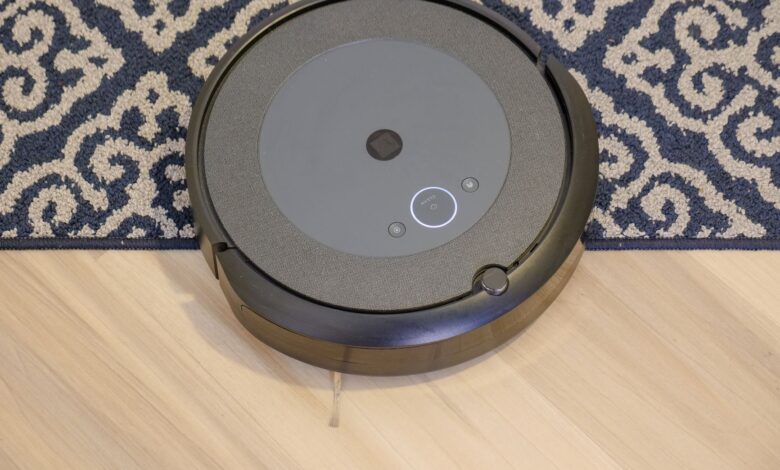
The suction number printed on the packaging doesn’t indicate how well the robot vacuum cleans carpeted surfaces. The way the brushes engage the carpet’s fibers, if the robot can drive over the carpet, and if the robot detects that it is on carpet are all things that suction ratings do not communicate. In one creator’s 2026 head-to-head, one manufacturer conducted a 2026 comparison of two robot vacuum cleaners, one rated at 30,000 Pa and another rated at 20,000 Pa. The 30,000 Pa robot collected 27% of the test debris from high-pile carpet while the 20,000 Pa robot collected 67.3%.
Although this comparison provides us with only one data point (one test), it should not be viewed as a ranking of the product. It’s worth noting that one manufacturer’s maximum suction rating applies only to that specific model. Additionally, you should recognize that a robot vacuum designed for use on carpeted surfaces is ultimately a maintenance tool for the manufacturer as Dreame itself does not pitch its robots as substitutes for traditional carpet cleaners. Start by examining the type of suction rating you want and think about what other factors you will need to consider when determining which robot vacuum to purchase.
Why advertised suction (Pa) alone cannot predict carpet pickup
The Pa indicator on a specification sheet is considered an indicator of pressure. According to the BIPM’s SI reference, the pascal is defined as the pressure unit having one newton per square metre, yet the pressure value itself offers no explanation regarding the number of hairs, or grit, which can be extracted from a carpet. The measurement for pickup will instead depend upon the amount of debris that has been placed onto a known carpet by the operator, as well as the specific robot settings being used, and the total weight, or scoring of the collected debris, or material, versus that remaining on the carpet, following use of the robot.
In addition to the method in which suction is tested impacting the different Suction levels, there are also discrepancies regarding testing methodology by the respective manufacturers. For example, the Suction Level as measured by the Vacuum Wars testing will be at the brush top or head housing, while a manufacturer will likely perform their Suction Level test at or near the location of the motor or motor area. Thus, when one reviews a manufacturer’s advertised suction or pressure rating, one should be mindful of this potential discrepancy in the reporting point of the suction or pressure levels. The Q7 series page footnotes its figures as Roborock’s own internal testing in Max+ mode on a full battery. That’s a disclosed method for one brand’s claim, not a shared carpet test you can use to compare brands. Vacuum Wars measures suction at the brushhead housing and says manufacturers typically test at the motor.
Even manufacturer advice doesn’t land on one number. Dreame’s carpet collection page says thick or high-pile carpet needs 30,000 to 35,000 Pa. Dreame’s own carpet explainer tells high-pile owners to look for 15,000 Pa or higher. When one brand publishes two thresholds, treat any Pa cutoff as marketing guidance, not a rule.
The strongest support for this conclusion is based on a single controlled test. The Hook Up’s 2026 comparison shows all of the robots used in this test performed the same two runs on the same high-pile carpet and utilized only suction for both passes. Each robot used approximately 40g (1.4oz) of debris made from flour, salt, flax seed, rice and dust in the test, while each robot’s dustbin’s weights were recorded both pre- and post-test. Using the advertised suction values from the robots’ creators, the 30,000 Pa 60 MOVA Mobius collected the least amount of the measured debris at 27%, the 22,000 Pa Ecovacs X12 OMNICyclone’s collection rate was 44.8%, and the 20,000 Pa Roborock QREVO Curv 2 Flow was the highest at 67.3%. While the Roborock Saros 20 advertised 36,000 Pa of suction/debris connection, the robot collected roughly 3g less debris than its prececessor, the Saros 10R, which advertised 22,000 Pa of suction/debris connection.
This one test raises the question of whether an increase in advertised suction will necessarily correlate with more debris collected. Therefore, it is important to understand the relationship between the two, and as previously mentioned, one factor regarding carpet debris collection is the brush design. The creator’s explanation regarding the importance of the design detail is supported by the creator’s years of experience testing robot vacuums, not from performing a controlled test of brushes. The Modern Castle’s Q5 Pro+ Reviewer also identified a related factor. The Reviewer’s conclusion was that the Q5 Pro+ scored slightly higher in performance on high pile carpet (96.8%) compared to performances on low pile carpet (95.1%) due to the Q5 Pro+ being better sealed against the taller carpet. Dreame’s 1st Party Claim regarding CarpetForce systems also addresses this factor stating that the CarpetForce system uses a pressure plate to produce better sealing and therefore create a stronger connection between robot and floor to minimize suction loss through the gap created by the height of the pile.
It’s important to tell whether you are reading a spec sheet as if it is a list of parts or whether it is a list of attributes (results) of some sort. Look for things like the type of brush, whether the head contacts the pile of your carpet, and whether the boost feature is enabled. The only way to actually know if the vacuum performed well on your type of dirt and carpet is to conduct an actual testing.
What independent carpet tests measure—and why their scores differ
The independent testing companies that conducted testing on robot vacuums do not have one standard test for all of them; rather, RTINGS lists high-pile, low-pile, pet hair, obstacle avoidance, and threshold clearance as five separate categories. Similarly, other publishers also separate their test results and follow this same pattern for each of the robots within a particular publisher. On the other hand, all of the test methods between publishers vary significantly.
| Tester | Carpet used | Debris | Settings and passes | How the result is scored | What it can’t tell you |
|---|---|---|---|---|---|
| RTINGS | Separate low-pile and high-pile setups in a fixed box | Sand, rice, and cereal, in the same amount and ratio every time | Tester picks settings suited to the floor, or lets the robot choose automatically | Subjective score for debris left in the path, at edges and corners, and side-brush scatter | It’s a judged score, not a weight percentage, so it can’t be lined up against weighed results elsewhere |
| Vacuum Wars | Medium-pile carpet | Deeply embedded sand | Maximum power for a fixed time, typically repeated three times | Dustbin weighed before and after | It’s not a high-pile test, and climbing ability is tested separately on smooth wood |
| Modern Castle | Separate low-pile and high-pile lanes | 0.5 oz (about 14 g) each of cereal, rice, kitty litter, and sugar | Two full cycles at highest power | Debris left on the lane weighed | The headline score mixes cleaning with navigation, build, usability, and maintenance |
| The Hook Up | High-pile carpet | 40 g of flour, salt, flax seed, and rice | Two passes, vacuum only, maximum suction | Dustbin weighed before and after | Bin weight shows what went into the robot, not what stayed in the carpet or got blown aside; it’s one creator’s setup |
Not every robot performs equally well on every type of tested surface. For example, one robot may be able to remove embedded sand from a medium-pile carpet while another robot may not be able to clean a plush rug at all. The percentage-based measurement also differs from RTINGS’ subjective scoring system. TechGearLab reports testing and rated a total of 23 different robots, however it did rating of carpet cleaning separately from other aspects of navigation and did not specify the pile height in its overview. Therefore, while TechGearLab may have given a good score for carpet cleaning for one robot, if the full review does not specify a high pile carpet, the rating could be misleading.
The way robot vacuums are set up may change the results as much as the hardware itself. For example, during a comparison performed by The Hook Up on 02/20/2025 regarding the Saros 10R, the Roborock app has an option to automatically increase the cleaning height of the body when cleaning carpets, which produced 9 grams of debris. When the same robot was tested on the same carpet, without the “Raise Body to Clean Carpet” setting, the results were 28.8 grams of debris, or 72%. While this example is dated, and only one robot is being used, it demonstrates that results from different modes for the same robot need to be listed alongside each other to be considered valid and useful.
The method of measurement used in the hair tests disguises issues as well. For example, when looking at the hair test for the Eufy Omni S2, the tester believed initially that this machine scored 100% due to how it picked up hair off a smooth surface. However, when watching the testing video, it became clear that the machine was actually using its rear exhaust to blow hair under the couch rather than sucking it off the floor, therefore, the dustbin weight was not able to accurately show that the machine did not actually pick up anything from the carpeted floor. A better way to check the actual performance of a robotic vacuum would have been by recording a video of the testing, or doing some form of quantification of the residuals left behind after the testing.
The ranking system used by RTINGS combines two additional aspects of measuring robotic vacuum cleaners, i.e., price and availability vs. performance, and instead of solely relying on scores, doesn’t recommend by scores alone. Vacuum Wars utilizes a combination of the RTINGS ranking and additional variables including the Eufy Omnia S2 model, and any reviews or star ratings on Amazon, to produce a composite score to give to the best vacuum cleaner to purchase, based on how well it performs on carpet, and not just on its ability to pick up hair on smooth surfaces. Before selecting one machine, it is best to investigate the criteria used for ranking them by comparing each one with respect to the guiding parameters including the tester used to perform the testing, the date of the test performed, the type of carpet used for testing, the quantity of debris used for the tests, along with which mode(s) and pass count were used during the testing, and, lastly, whether or not the results were weighted or ranked.
Will it clean your carpet—and get across it without getting stuck?
In order for a robot vacuum cleaner to be considered good on carpet, it will need to pass through four separate tests in your home; picking up debris from your carpet pile, moving over and around the carpet pile, dealing with clutter and rug edge transitions, and sensing when it is on carpet so that the correct settings will be activated. There is strong evidence supporting one of these tests but little to no supporting evidence regarding the remaining three.
Before you begin shopping for a vacuum cleaner, you should determine which type of carpet you currently have. To measure your carpet’s pile height (or tuft height), the Carpet & Rug Institute (CRI) has published a Carpet Primer — it measures this distance from the primary backing of the carpet to the top of the yarn pile. According to the CRI’s technical bulletin, however, using a ruler/dip stick reading “is intended only for approximate measurements.” You should obtain the specifications of your carpet from the manufacturer whenever possible, as they are far more accurate than the label on your carpet. Additionally, labels can often be incorrect or misleading. For example, a user on Reddit r/RobotVacuums posted on 01/27/2026 asking which robot vacuum he should buy for high pile carpet; the top response pointed out that the picture in his post “looks like Berber carpet, not high-pile.” The distinctions between these two different types of carpet require different criteria in evaluating potential robot vacuums.
| Your floor | Main risk | Evidence to look for | Treat fit as unknown when |
|---|---|---|---|
| Short, dense, or Berber-style carpet | The robot may not register it as carpet, so automatic boost may not turn on | A low-pile pickup result from a named tester, and how that model detects carpet | All you have is a Pa figure or a “carpet boost” label |
| Medium pile mixed with hard floors | Detection that’s right on some runs and wrong on others, plus mop behavior at carpet edges | A pickup test on similar pile, plus the carpet settings in the current app | The model has no carpet sensor and you haven’t confirmed you can mark carpets by hand |
| Plush, shag, or high pile | Wheels sinking, long fibers setting off the drop sensors, or the manual ruling the rug out | The manual’s rug limit, a high-pile test, and separate evidence that it can climb on and off | The manual warns against high pile, or no comparable test exists |
| Fringed, loose, or lightweight rugs | Tassels wrapping the brush, or the rug getting dragged or sucked up | Manual guidance on tassels, and a test with a loose tasseled rug | Neither the manual nor any test covers that kind of rug |
| Very dark or near-black carpet | Drop sensors reading the carpet as a ledge | Brand support notes and reviews that show how the model behaves on dark rugs | No dark-carpet evidence exists for that model |
| Vacuum-mop combo crossing carpet | Damp pads touching carpet edges | Tested mop-lift or mop-cover results, or a vacuum-carpets-first option | All you have is the brand’s claim of automatic mop lift |
The risks associated with the table come from specific user manuals and tests. Here are some of the sources of this information. In the eufy X10 Pro Omni user manual, it states that when dealing with tasseled rugs, you should fold down the edges. And it states to “Avoid cleaning high pile rugs or rugs greater than 0.71 inches /18 mm in height since these types of rugs may lead to a defect in the RoboVac.” That height limitation pertains specifically to that RoboVac model. However, eufy’s website states that their carpet support page recommends “Vacuum Only” for low pile rugs and “Carpet Avoidance” for medium to high pile rugs for the same RoboVac. The RTINGS adaptability test uses a loose tasseled rug to determine if the unit pulls the rug in or jams the brush on the rug. Roborock states that long fibers may trigger their cliff sensors as if the unit is about to fall off of a ledge.
Climbing on a rug is not the same thing as cleaning it. An article posted on r/RobotVacuums dated back to June 25, 2026, showed an image of a shag rug approximately 1.5 inches /4 cm tall. The poster expressed concern that the robot would experience “faulting” every time it comes to the rug. They later clarified that the robot they bought, when used with non-slip mats under the rug, was able to climb on and cross the shag rug and “makes some attempt to clean it.” They also mentioned that they could not determine how well it cleaned. This may represent one household situation, but it demonstrates the difficulty in assessing whether or not a robot vacuum can cross over a rug independently (mobility) versus whether or not it can clean a shaggy rug adequately (cleaning performance).
When the robot stops at, skips, or ignores a rug
The drop sensors are likely the reason if the dark rug is being rejected. Roborock explains that dark carpets trigger cliff sensors in the same way as drops, so they cannot be disabled due to their importance to most homes. It is important not to block these sensors. According to eufy or the manual, the cliff sensors prevent the robot from falling down stairs. Mark the rug as a no-go area and clean up with a vacuum. Alternatively, search through the reviews to find a model that works well on dark rugs.
If the boost function does not activate with the carpet, it could be because the carpet does not register as ‘rough’ enough. Roborock’s carpet boost function [senses rising brush resistance], but they claim that [short, smooth pile] may not register. To solve this problem, Dreame’s carpet boost troubleshooting suggests ensuring the boost switch is turned on and then taping all four corners of thin/small carpets to allow for the edge detection. Most budget models do not use this type of sensor. According to RTINGS, the Roborock Q7 M5 requires that carpets be marked ‘manually’ in the app.
If it drives around a rug you marked, check the carpet’s setting. A Dreame owner on the brand’s forum reported exactly that in June 2025. Dreame AfterSales replied: “Please try to set the floor material to other first, and then manually add the carpet again.” The Hook Up found that the Narwal app sets carpets to “cross only” by default, which keeps the robot from cleaning them even in vacuum-only mode.
Before relying on a mop setting for damp carpet edges, always do a test run with the mop setting. According to a 2026 test conducted by The Hook Up, only the QREVO Curv 2 Flow maintained complete dryness on carpets during testing due to its retractable mop cover. The spinning-pad robots did not possess adequate height capabilities to boot their pads high enough to properly dry carpets; however, the robots could leave the pads stationed at their docks while still being able to vacuum the carpets first. A vacuuming-first approach is the most straightforward solution available through the app, if it’s offered.
How to choose a budget robot vacuum for carpet without chasing a single “best” pick
The “Best” lists change rapidly. RTINGS has a post with the last update on 08/31/2026 to show their Carpet page [picks swapped] that were updated on the following dates 11/25/2025, 02/23/2026, 05/28/2026, and 08/31/2026 – mainly due to being discontinued or not available in stock. A “Best” list based on your carpet evidence will usually be more dependable than one that is just borrowed off of a “Best” list.
The budget models are budgeted to save you money in specific areas; it is important to figure out which areas are targeted for savings. According to RTINGS, a budget carpet option, the eufy Auto-Empty C10, is capable of handling large-medium debris on carpet but struggles with fine material that is stuck deeply into the carpet’s fibers, as well as pet hair. Another aspect that this robot lacks is the ability to recognize obstacles in real-time. This robot does come with a self-empty dock, which is a feature designed for convenience; RTINGS noted in their pickup notes that the self-empty dock does not compensate for lower performance in the carpet. When doing a side-by-side price comparison for these two items, you must keep them separated from each other. The Hook Up Creator has an opinion that is worth using as a reference against your needs; he believes that some of the less-expensive vacuum cleaners are actually better at cleaning carpets than other more expensive vacuums based on how their brush rollers are designed to be operated. If he is right, you will likely have to spend more time cleaning your brush rolls with your hands.
When making plans for upkeep on the eufy X10 Pro Omni, the owner’s manual states that they should clean the roller brush once per month, and the brush roller should be replaced every six months. Both RTINGS and Modern Castle consider the recurring costs of equipment on the basis of the manufacturer replacement instructions. Lastly, you have to keep your expectations in a reasonable perspective. An owner of a robotic vacuum on the 03/17/2024 r/Roborock, stated that an upright vacuum pulled out much more dirt from their low-pile carpet after the robot cleaned it. They stated: “I think I had unrealistic expectations.”
The evidence-check worksheet
Create one entry per robot from your shortlist. Use the exact model number, the manual in place when you looked at it, and the app you used at that time to perform any checks required to determine suitability. Each row has a different weight. The first row is a gate check; if the manual says your carpet will not work, then stop. The second and third rows carry the most weight because they rely on actual measurements. The fourth through sixth rows will help you decide between robots that have passed these first three checks. The order of the rows reflects the author’s conclusion based on the supporting data above, NOT a standard by which all testers will evaluate products, and therefore, you should not combine point totals. Although a large quantity of “supported” features can be impressive, that does NOT replace missing information in Row 2.
| Check | Where to look | Supported | Conditional | Not shown |
|---|---|---|---|---|
| 1. Manual allows your carpet or rug | Model’s manual and carpet support pages | The manual allows your pile and rug type | Allowed with steps, such as folding tassels or setting a carpet mode | The manual warns against your carpet: stop |
| 2. Pickup test matches your carpet and mess | Named tester’s method page and review | Similar pile and debris (fine grit, hair, crumbs), with mode and passes listed | Different pile, debris, or mode | Only a Pa figure or marketing copy |
| 3. Gets on, across, and off your rugs | Review notes on rug edges, thresholds, getting stuck | Tested on similar pile or rug edges | Threshold results only | No mobility evidence |
| 4. Knows when it’s on carpet | Manual, support pages, review notes on sensors | Carpet sensor plus a boost setting in the current app | Carpets must be marked by hand | Detection method not disclosed |
| 5. Keeps carpet dry (combos only) | Mop-lift or mop-cover test results | Tested dry on carpet | Dry only with a vacuum-carpets-first routine | Brand claim only |
| 6. Upkeep you’ll actually do | Manual’s maintenance table, recurring-cost scores | Schedule and parts listed | Schedule unclear | Nothing published |
After two or three robots successfully pass both of the first two rows, operate your selected robot with supervision on all of the rugs you have while operating the robot for the first time. It is at this time that mobility, carpet sensor, and vacuum behavior will become apparent in your home.
The Carpet-Test Questions That Matter
Before trusting any suction, ask these five key questions regarding the manual for your specific model regarding carpets, the result of a named tester is comparable to your pile and type of mess, if there is documentation/literature showing that it will pick up and remove the mess from your rugs; does the machine automatically detect the carpet or do you have to manually mark it? If the response for any of these is not known, open the area to see what the PA number is instead of filling in missing information. Treat the winning machine as your daily maintenance tool and keep up on regular deep cleanings on your terms as needed.
Frequently Asked Questions
Why does my robot vacuum stop at my dark rug?
Drop sensors in vacuum robots can interpret nearly black carpet as a ledge. As a result, the robot will back away from it. Roborock claims that the cliff sensors cannot be turned off. To avoid tripping the cliff sensor, set the rug as a no-go zone and vacuum by hand.
My robot doesn’t boost suction on one rug. Is it broken?
Roborock relies on brush pressure to determine the type of rug it can detect. It may not have the necessary technology to identify short, smooth pile rugs. First, make sure the surge switch is activated before doing anything else. Dreame recommends taping down thin rugs, and their support team recommended re-adding a manually marked carpet.
How do I know if I have high-pile carpet?
Consult the manufacturer’s specifications for the rug before determining the rug’s height. According to CRI, a ruler reading provides only an approximation of the rug height. Dense Berber may look thick but is not a high-pile rug. Therefore, compare what you found to the rug height limit listed in the manual for the robot you are considering.
Can a robot vacuum replace shampooing my carpet?
No. A robot vacuum is designed to pick up dirt and debris regularly, but it will not replace an extractor or professional carpet cleaner when it comes to cleaning stains and deep-seated dirt. Dreame does not position their robots as replacements for traditional carpet cleaners.
